
2025 Jun - Sep ( 6 months )
Lead Product Designer (myself), Product Designer Intern, Software Engineer, Product Manager
Figma, Figjam
Product Designer responsible for research, wireframing, and rapid-prototyping.
UX research, persona synthesis, workflow redesign, new IA, component system, cross-functional alignment.
Shuk Rentals is a fast-growing rental management platform with over 2M+ payments processed, built by landlords for landlords. Despite market traction, the platform suffered from fragmented payment flows that triggered frequent support tickets, user errors, and unnecessary communication between landlords and renters. I led an end-to-end redesign across web and mobile, rearchitecting the core financial task flows and establishing a scalable Figma component library to align engineering and product teams.
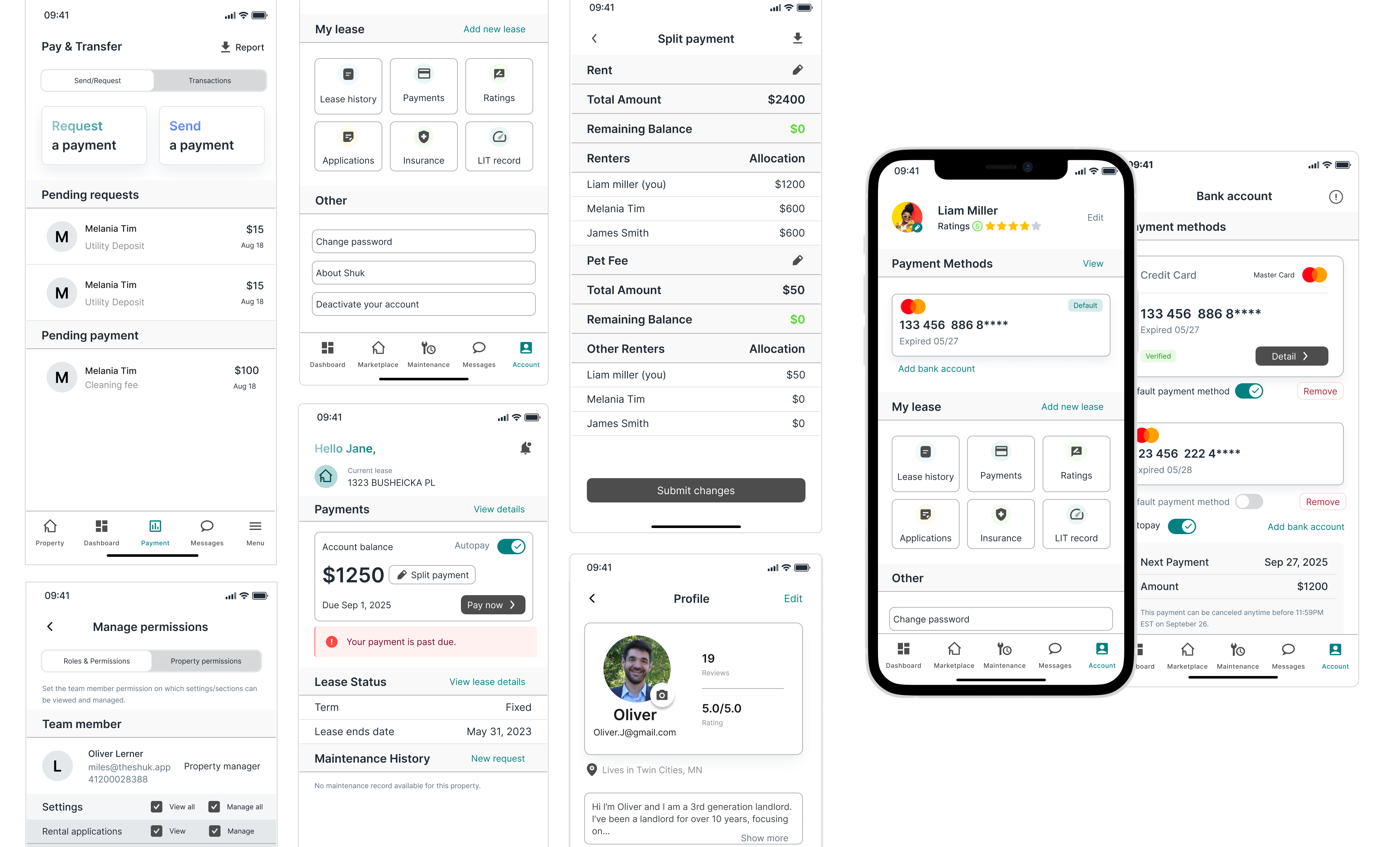
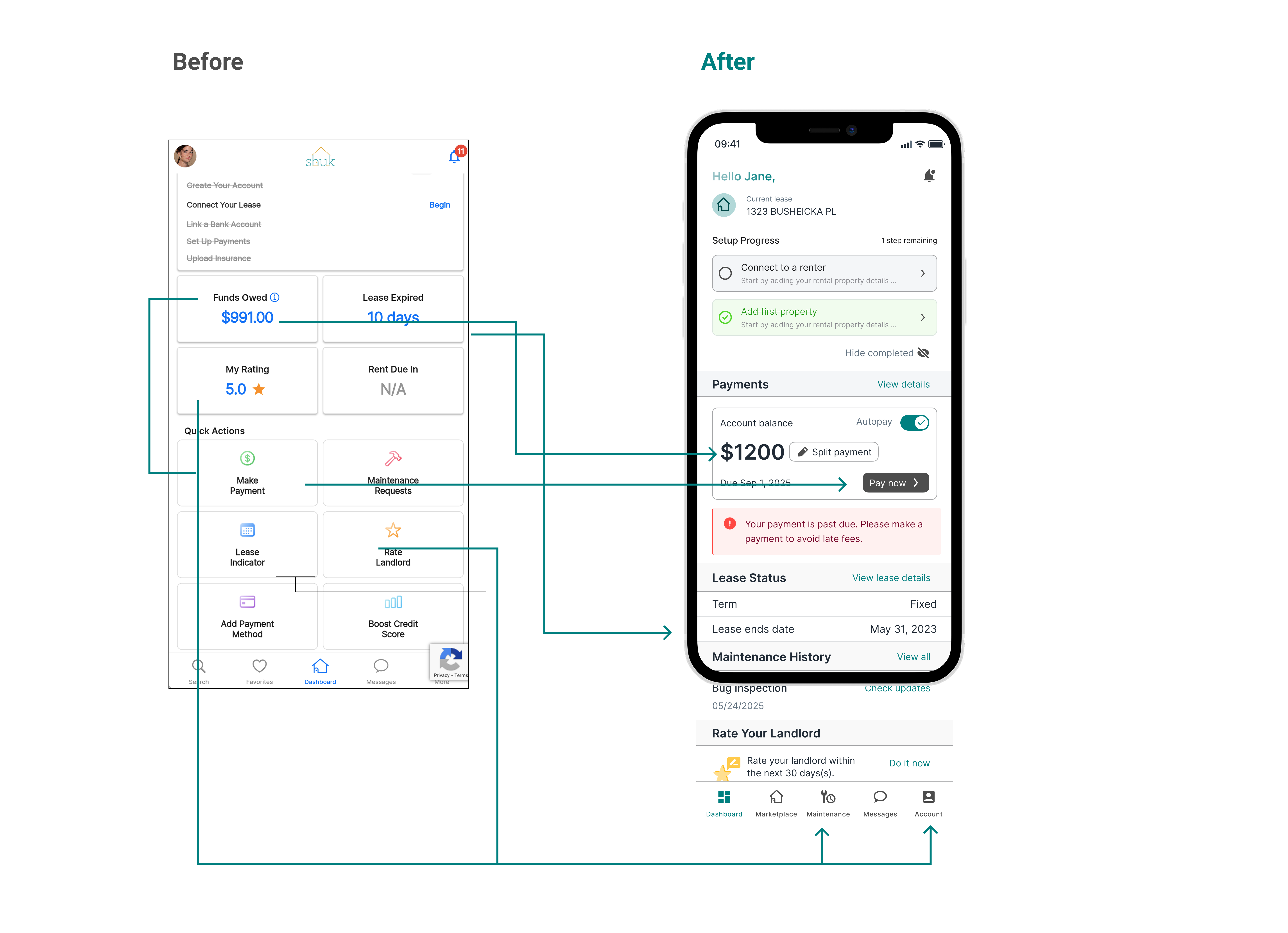
Financial software relies heavily on user trust, yet the existing platform created unnecessary ambiguity. I conducted a comprehensive UX audit across onboarding, dashboard management, and transaction flows, surfacing three major friction areas:
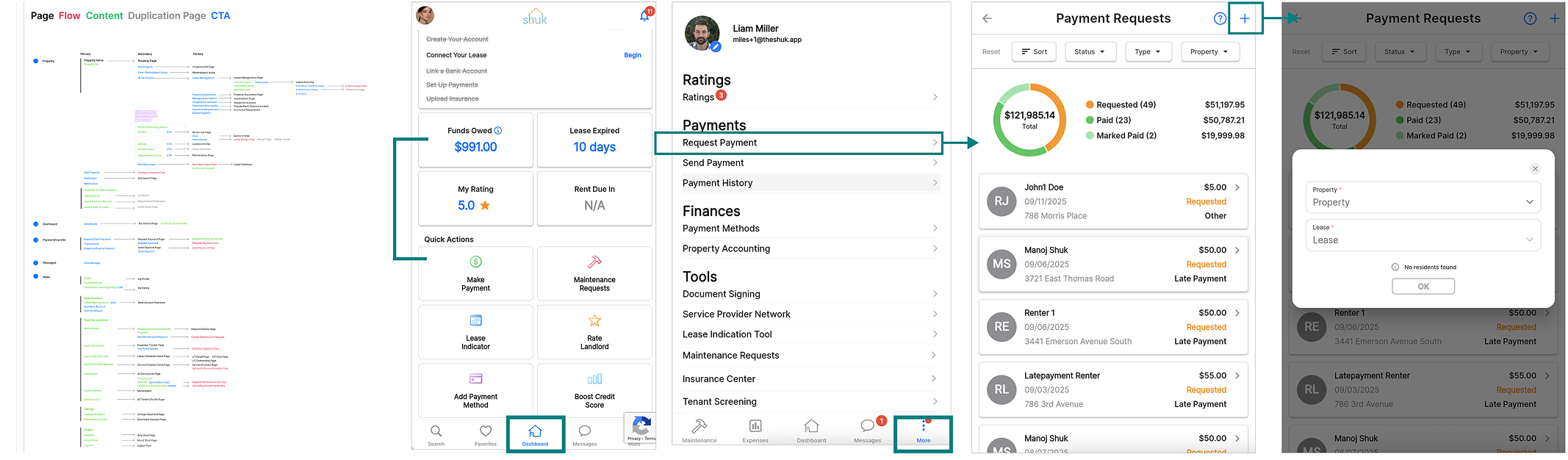
With these insights, I met with the PM and cofounder to walk through the key friction points. As we reviewed the workflows, they immediately recognized the issues as recurring themes in user complaints. This confirmed that the problems I identified aligned with long-standing feedback from both tenants and landlords.
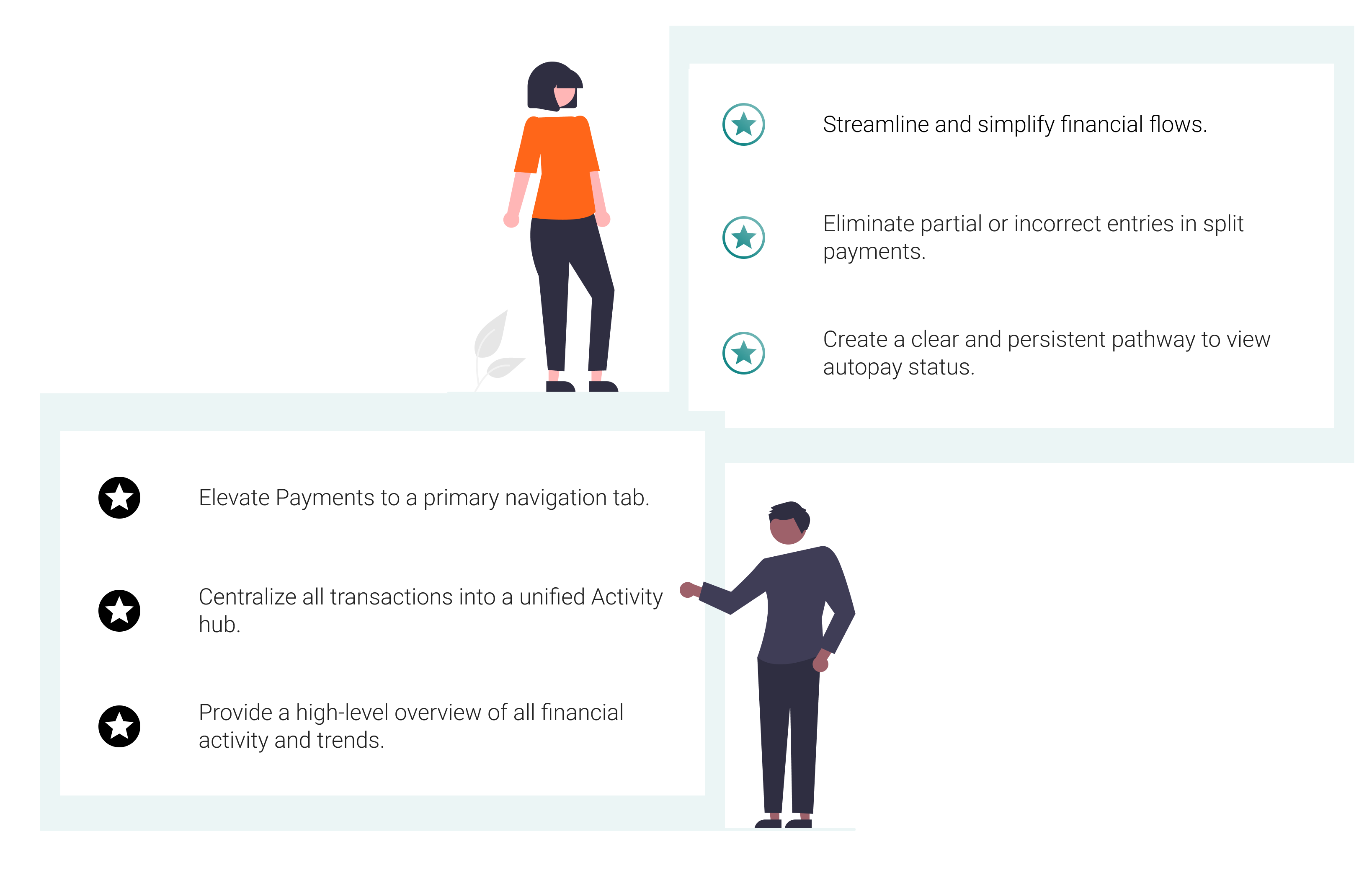
Demonstrating how UI confusion directly correlated with high support volume established immediate buy-in to prioritize information architecture overhaul.
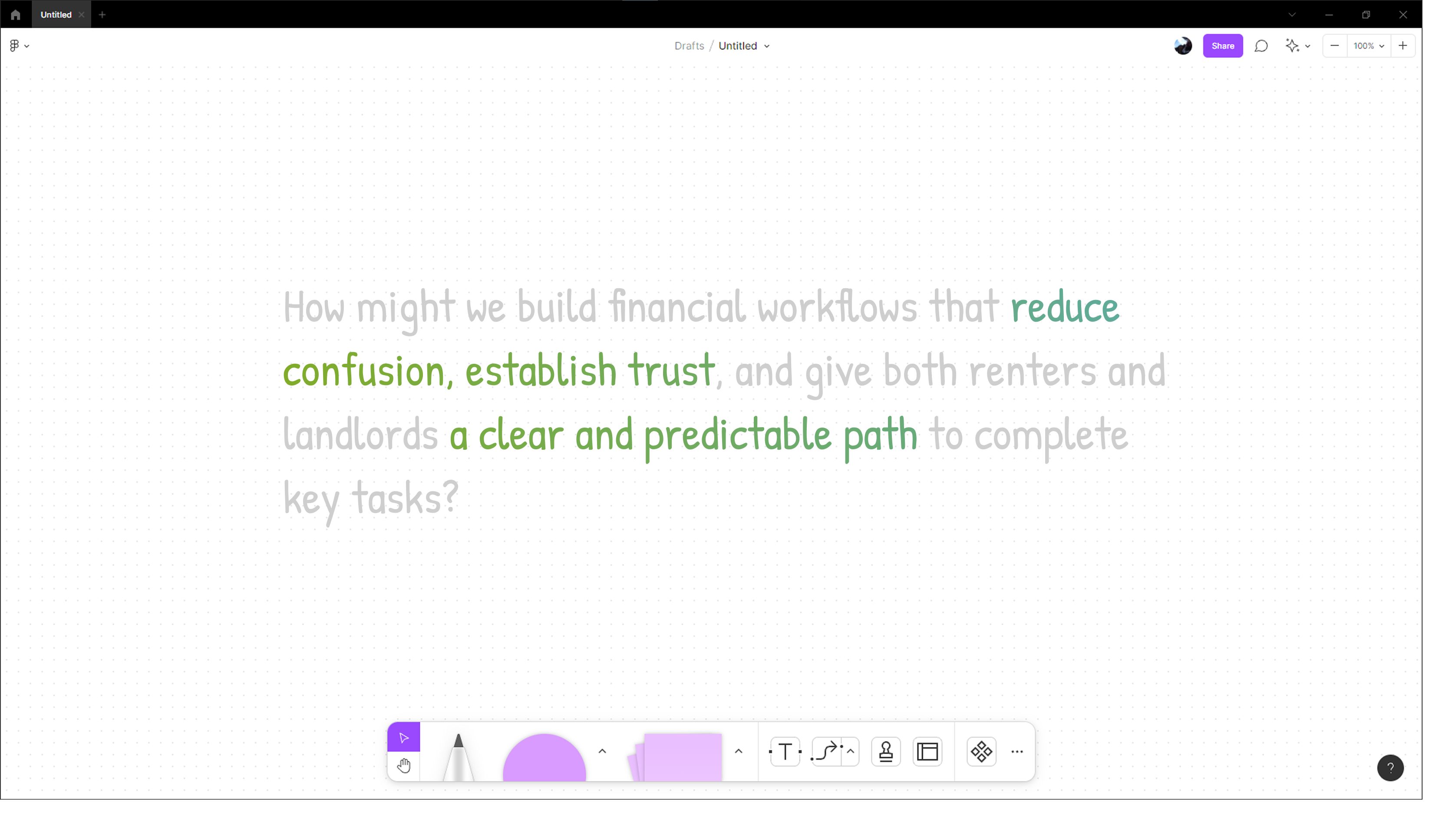
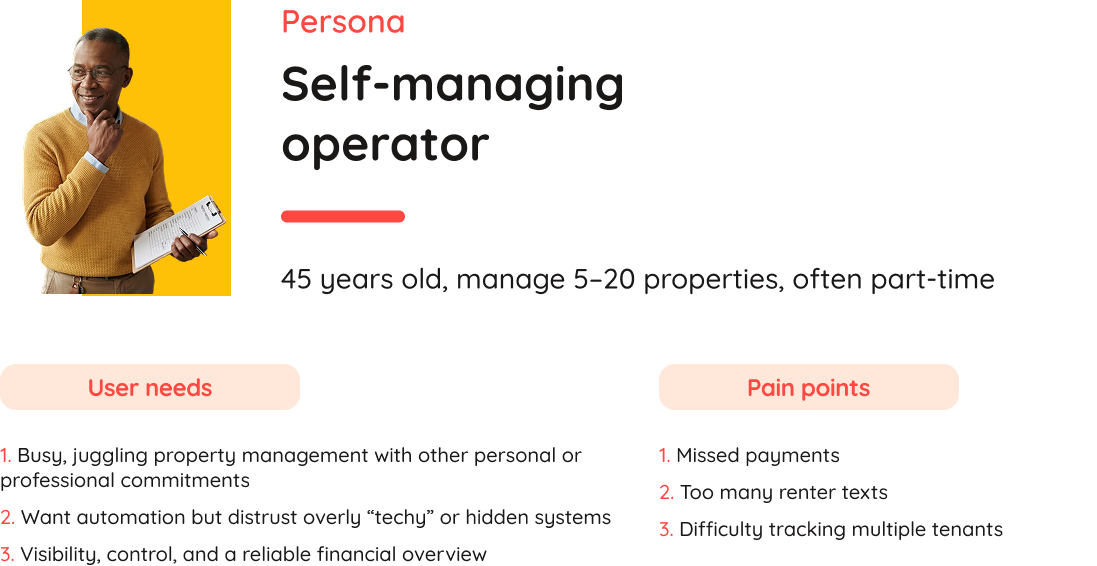
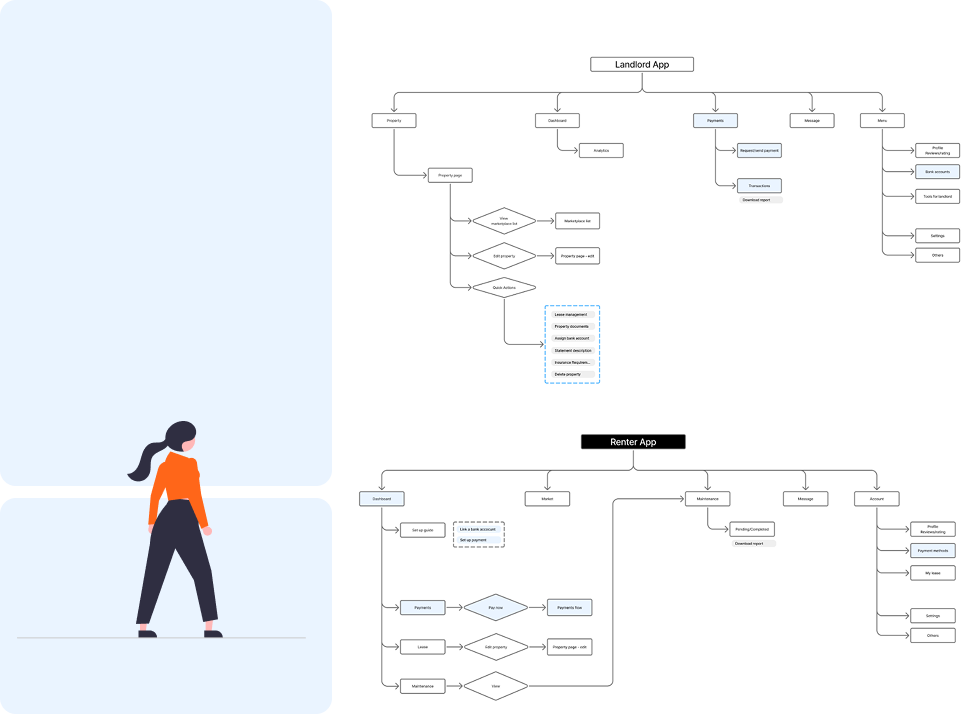
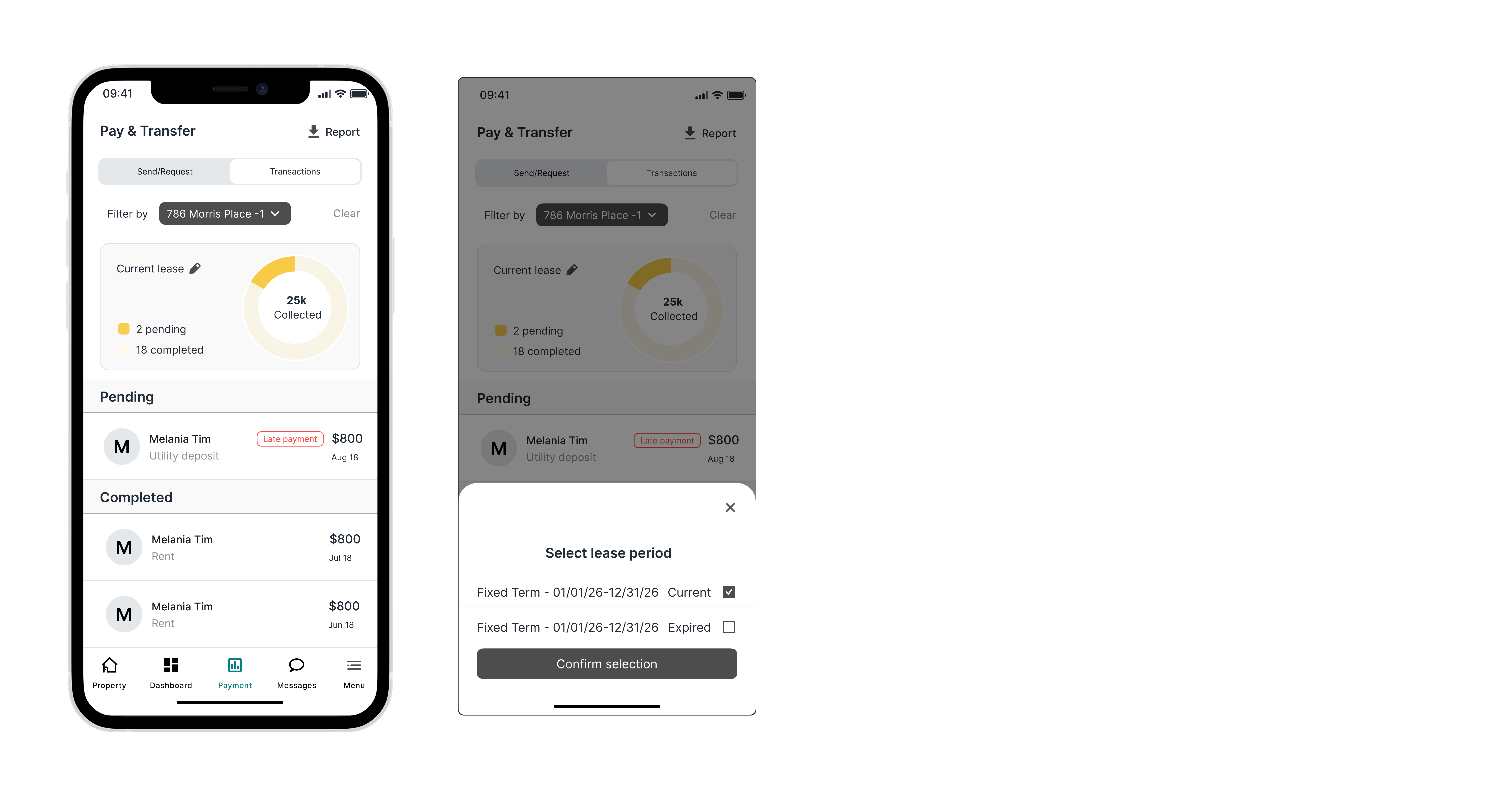
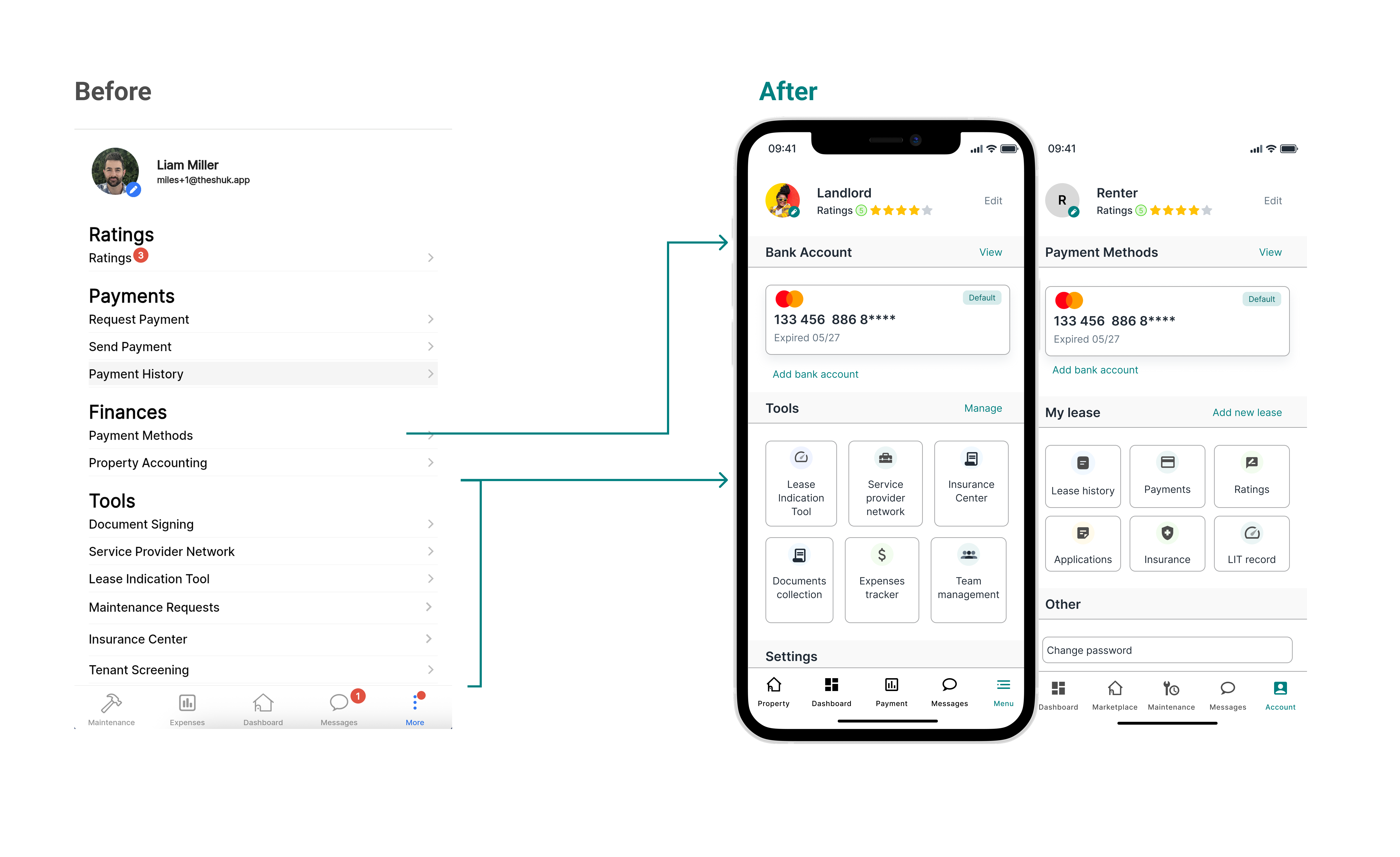
Because renters and landlords engage with payments in fundamentally different ways, I tailored each experience to match their priorities. Landlords focus on monitoring and managing payments, whereas renters value clarity and a simple, frictionless way to pay.
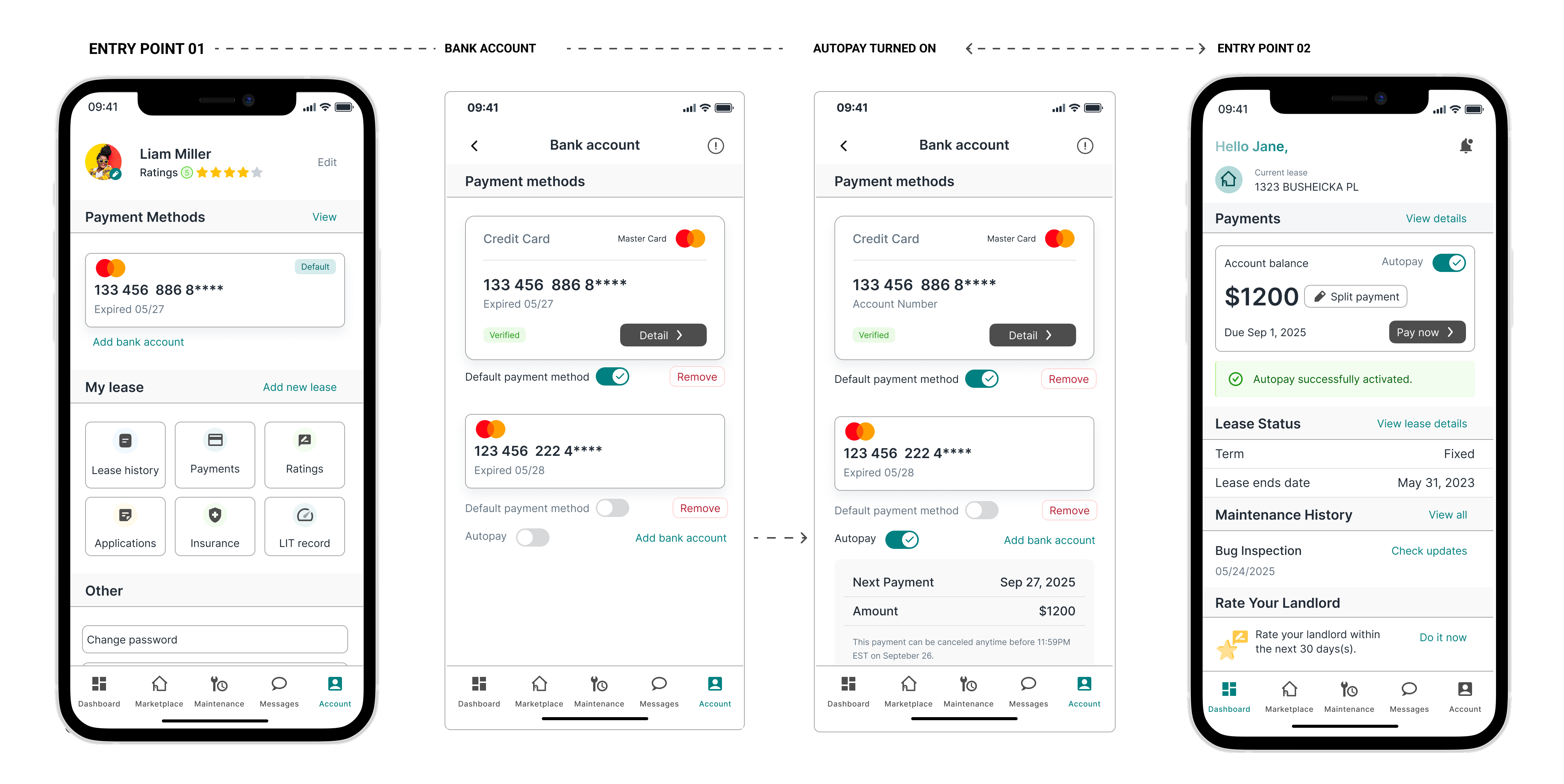
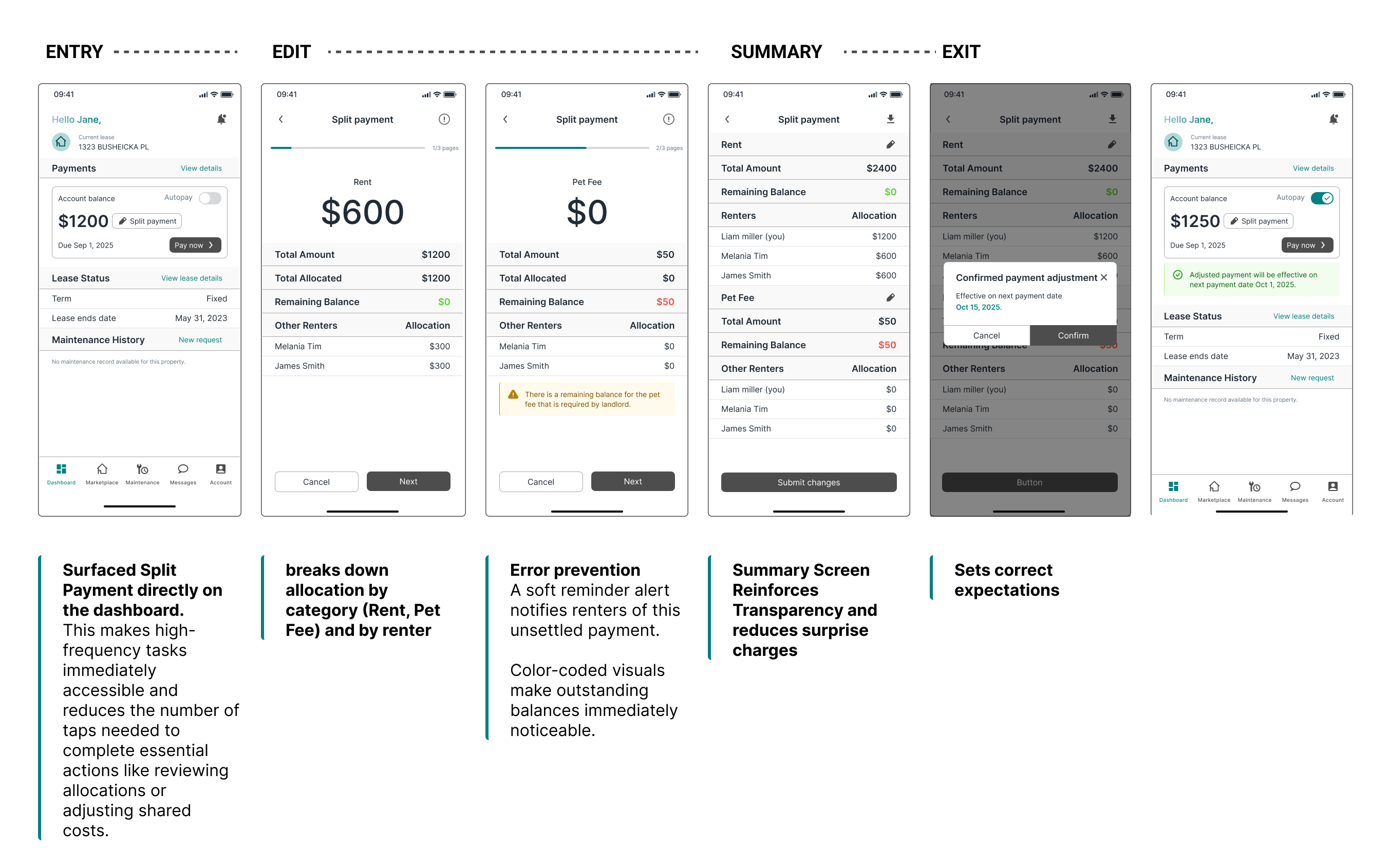
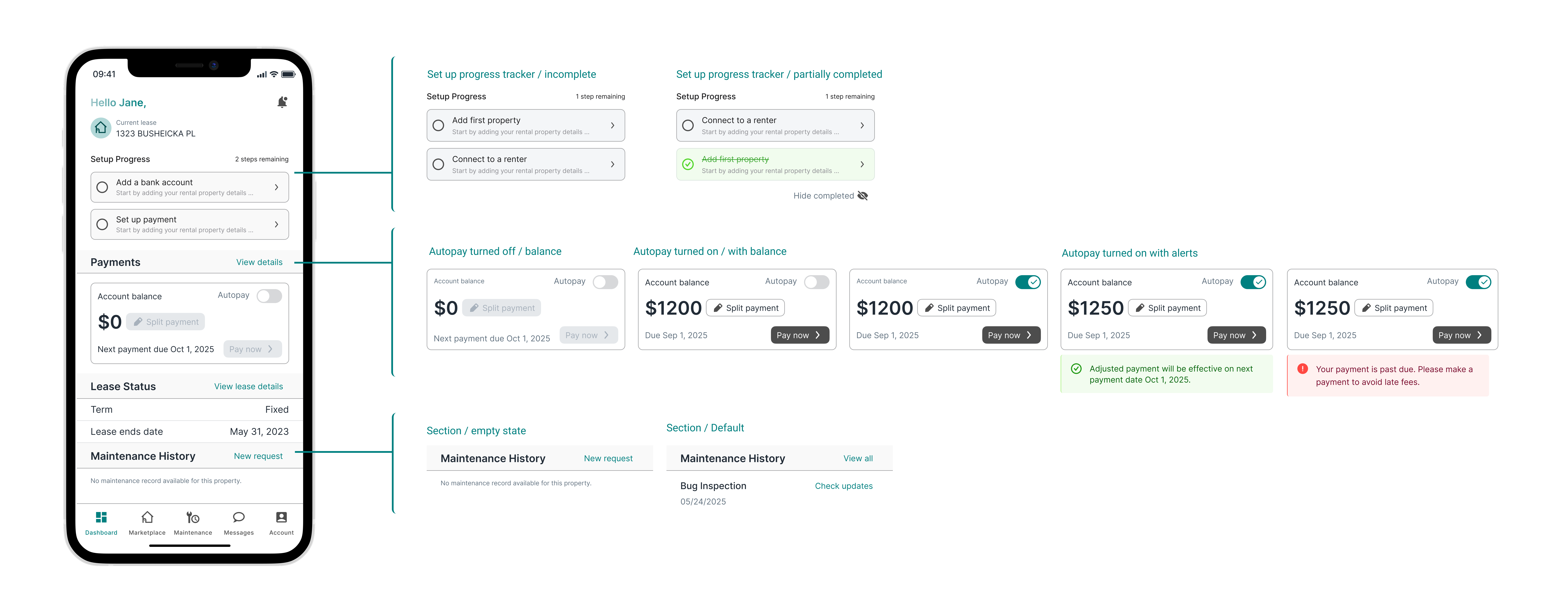
Renters can now turn on/off autopay whether from dashboard or via bank account. Adding the entry point for users to alternate settings after onboarding.
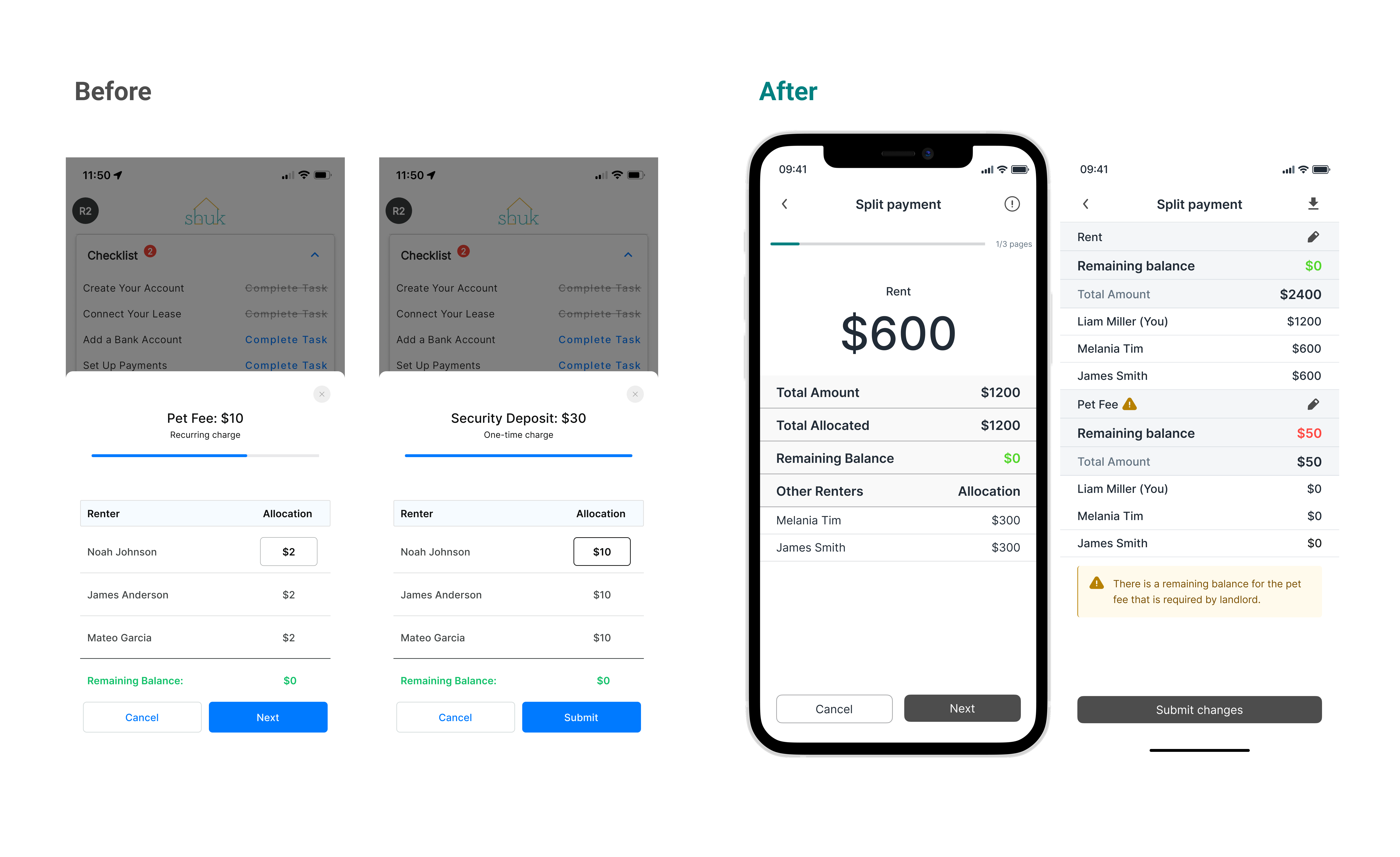
A redesigned split payment flow prevents incorrect allocations, provides real-time validation, and reduces mistakes.
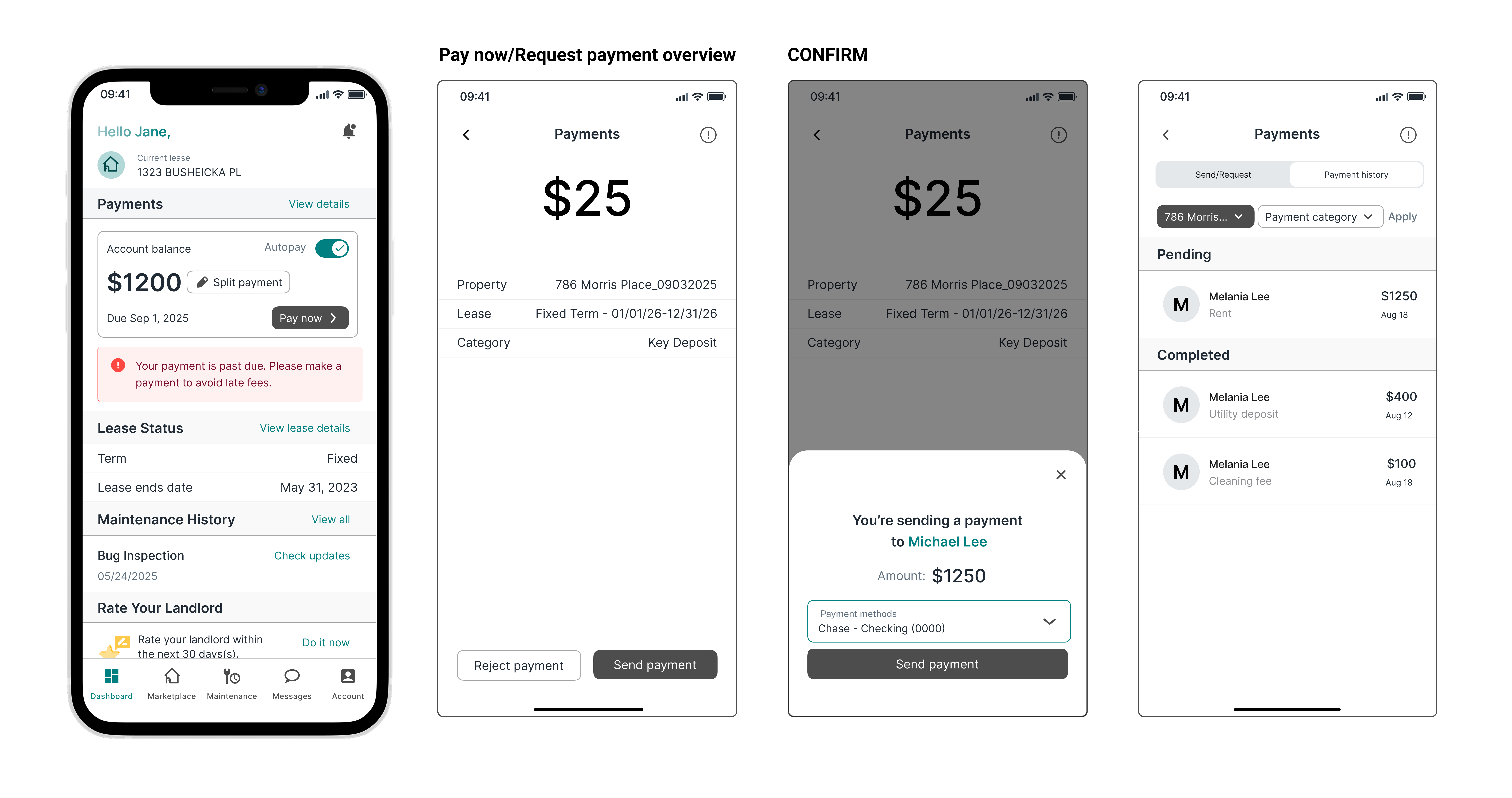
This streamlined payment flows covers main renter payments activities including pay required payment, and send money to landlord.
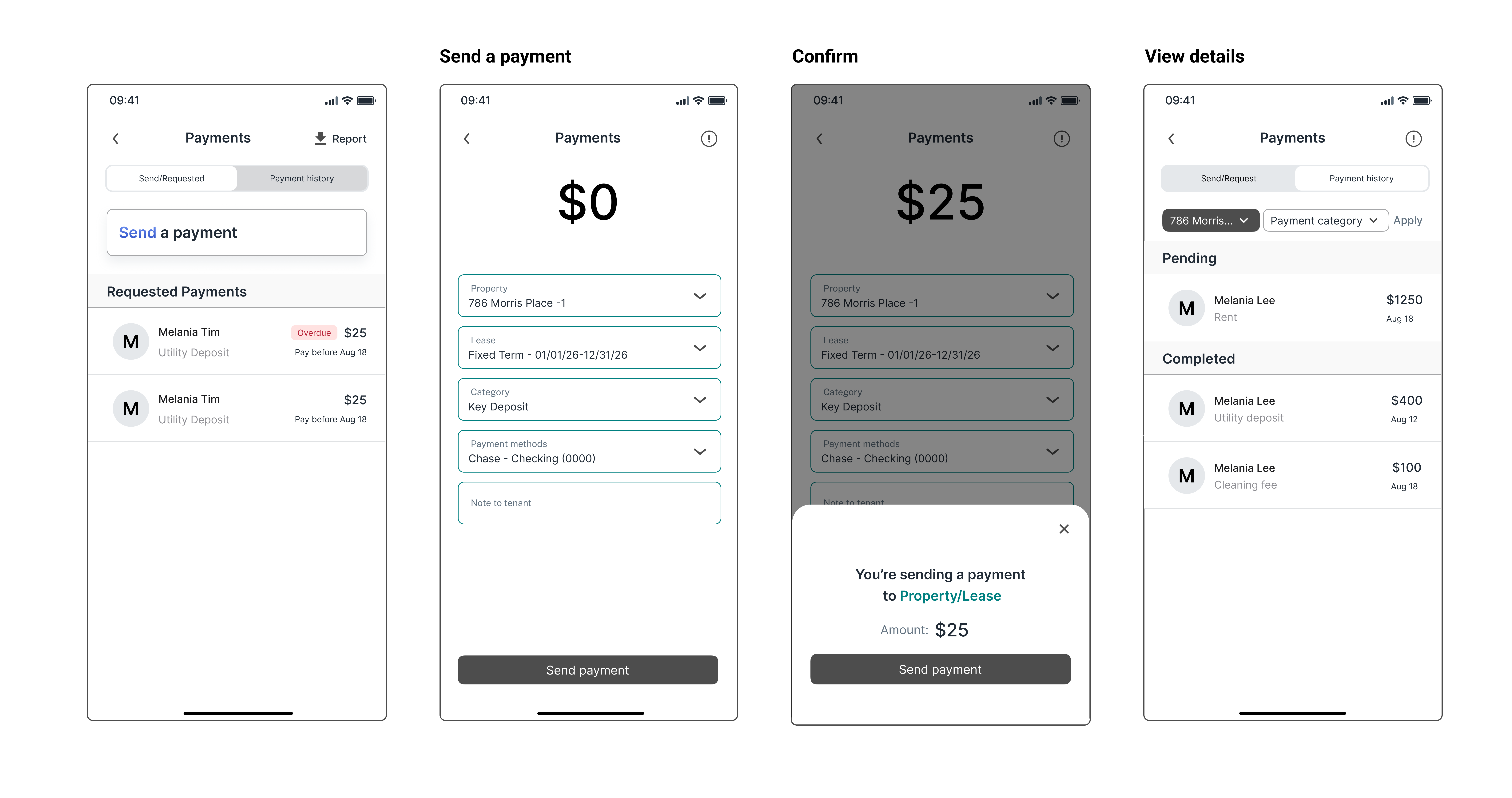
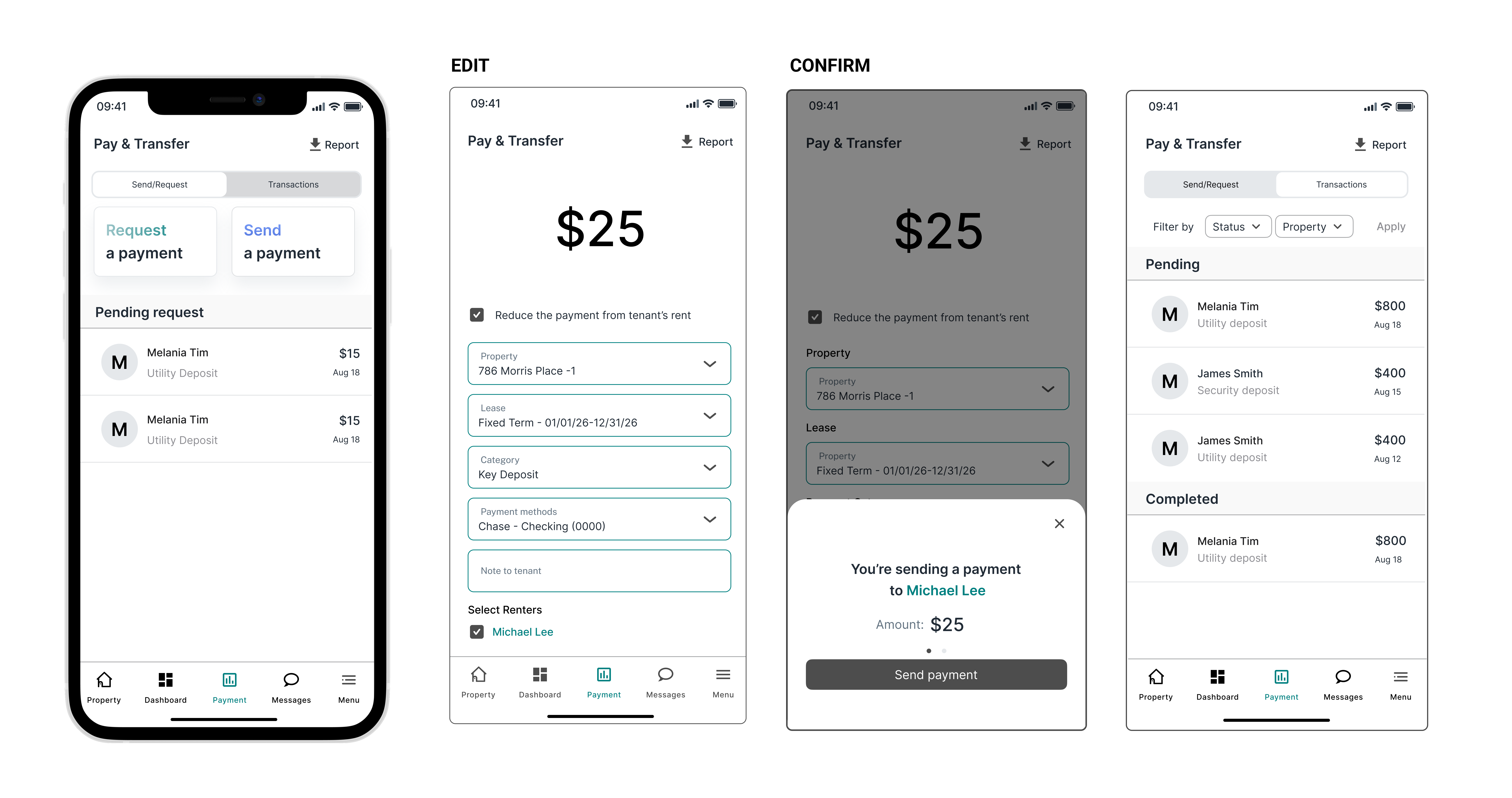
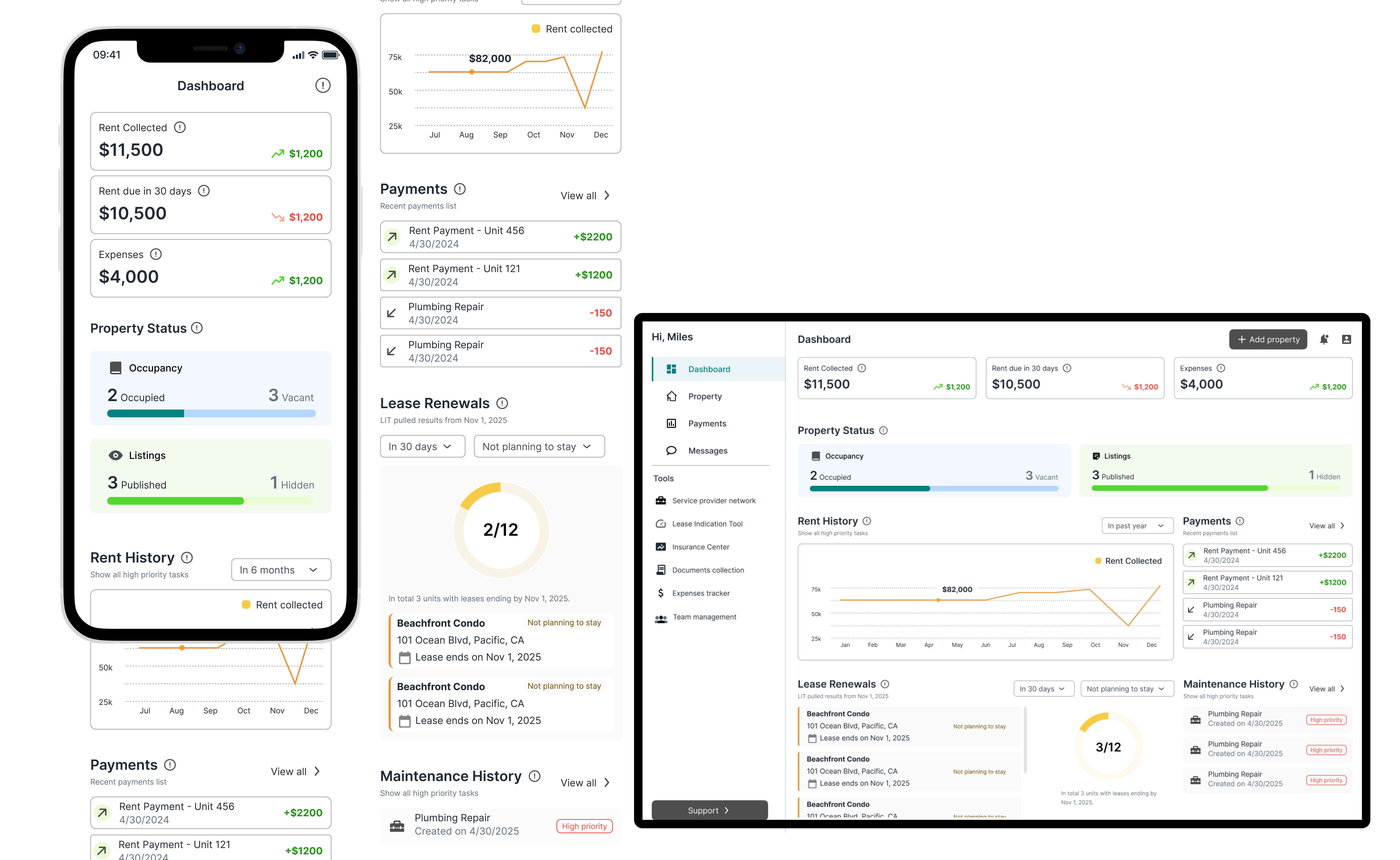
I delivered a comprehensive design handoff that included edge cases, specifications, conditional screen logic, and variations in card design, ensuring engineering had everything needed to build accurately without ambiguity.

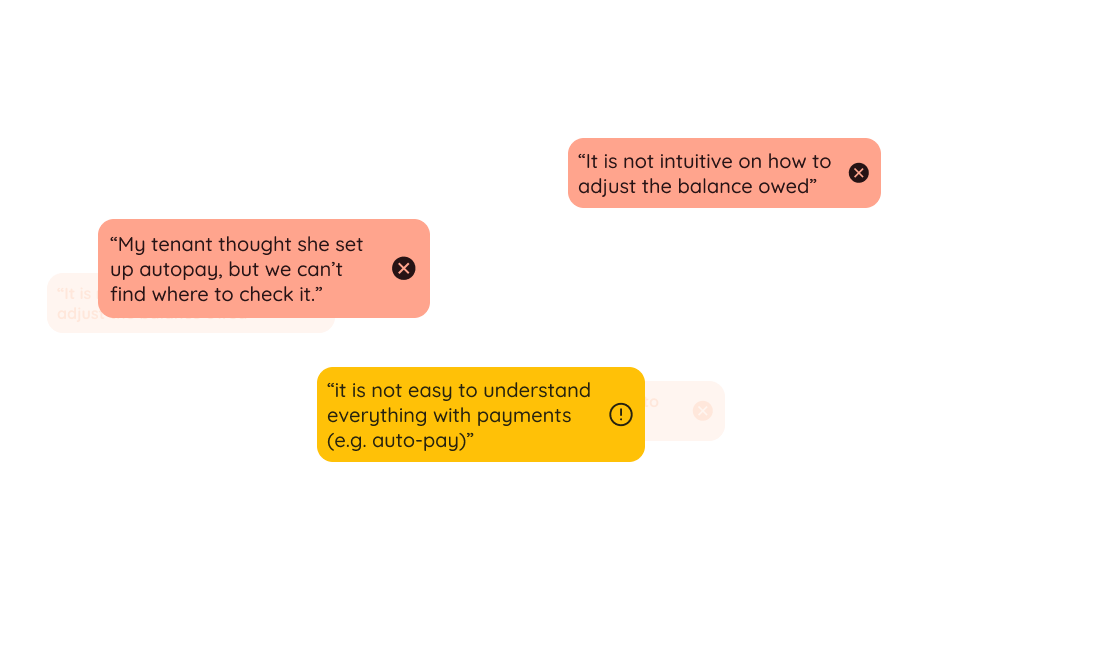
Designing for financial trust required deep empathy for two conflicting mental models. Key takeaways from this project include:
Clarity over Flexibility: Reducing choices during critical payment tasks led to higher user confidence and lower error rates.This project reinforced the importance of designing workflows around the distinct mental models of renters and landlords. Their needs weren’t just different—they required separate structures to support clarity, control, and trust.
Component-Driven Velocity: Investing early in design systems yields massive returns in cross-functional collaboration and prototyping speed.
From Founder & CEO of Shuk Rentals
"I had the pleasure of working with Kathy on our design system project at Shuk, and I can't recommend her highly enough.
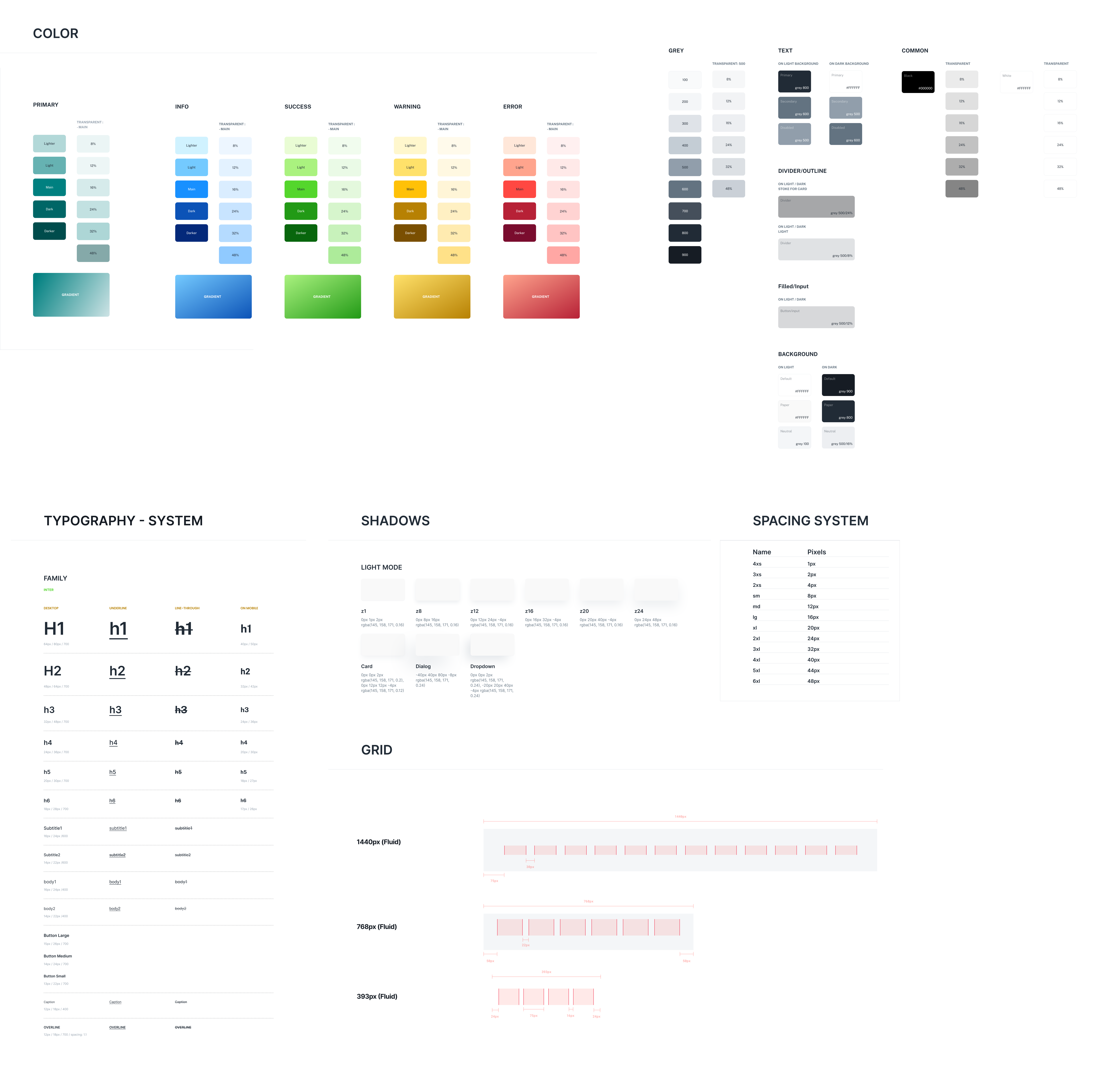
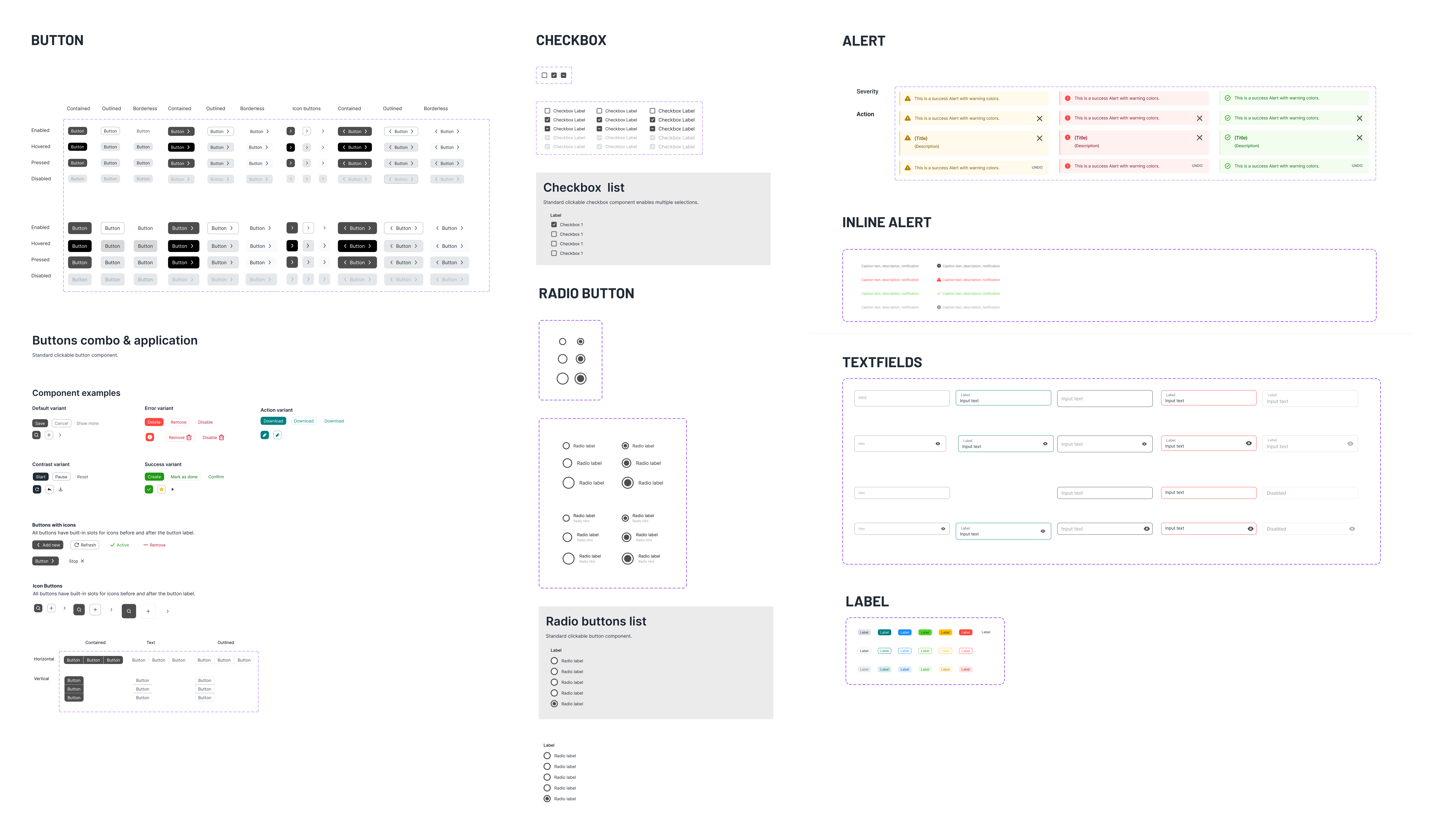
Over the past few months, she took on the challenge of re-designing our mobile and web platforms and the results exceeded our expectations. Kathy built us a complete Figma-based design system following atomic design principles, with thorough documentation and components that work seamlessly across both our app and web platforms.
What stood out most about Kathy was her ability to grasp the bigger picture of what we're building. She took the time to deeply understand our different user types and what matters most to each of them. This kind of user-centric thinking informed her entire approach to our information architecture.
Beyond her technical skills, Kathy was a joy to collaborate with. Professional, responsive, and always thinking one step ahead. Any team would be lucky to have her."


A Product Designer
based in Washington DC-Baltimore Area


